> ## Documentation Index
> Fetch the complete documentation index at: https://docs.agi3.ae/llms.txt
> Use this file to discover all available pages before exploring further.
# Swap assets
> Converting one asset into another inside a portfolio: reading the quote, setting slippage, and where the received asset lands.
Lend and borrow markets are specific about assets: a USDT market takes USDT, an ETH/USDC position is repaid in USDC. Swap is how holdings that arrived as one asset become the asset a market requires, without leaving the platform or the portfolio.
## Steps
1. Open **Swap** and check the receiving portfolio shown; swapped assets land where you point them, and the destination is always explicit.
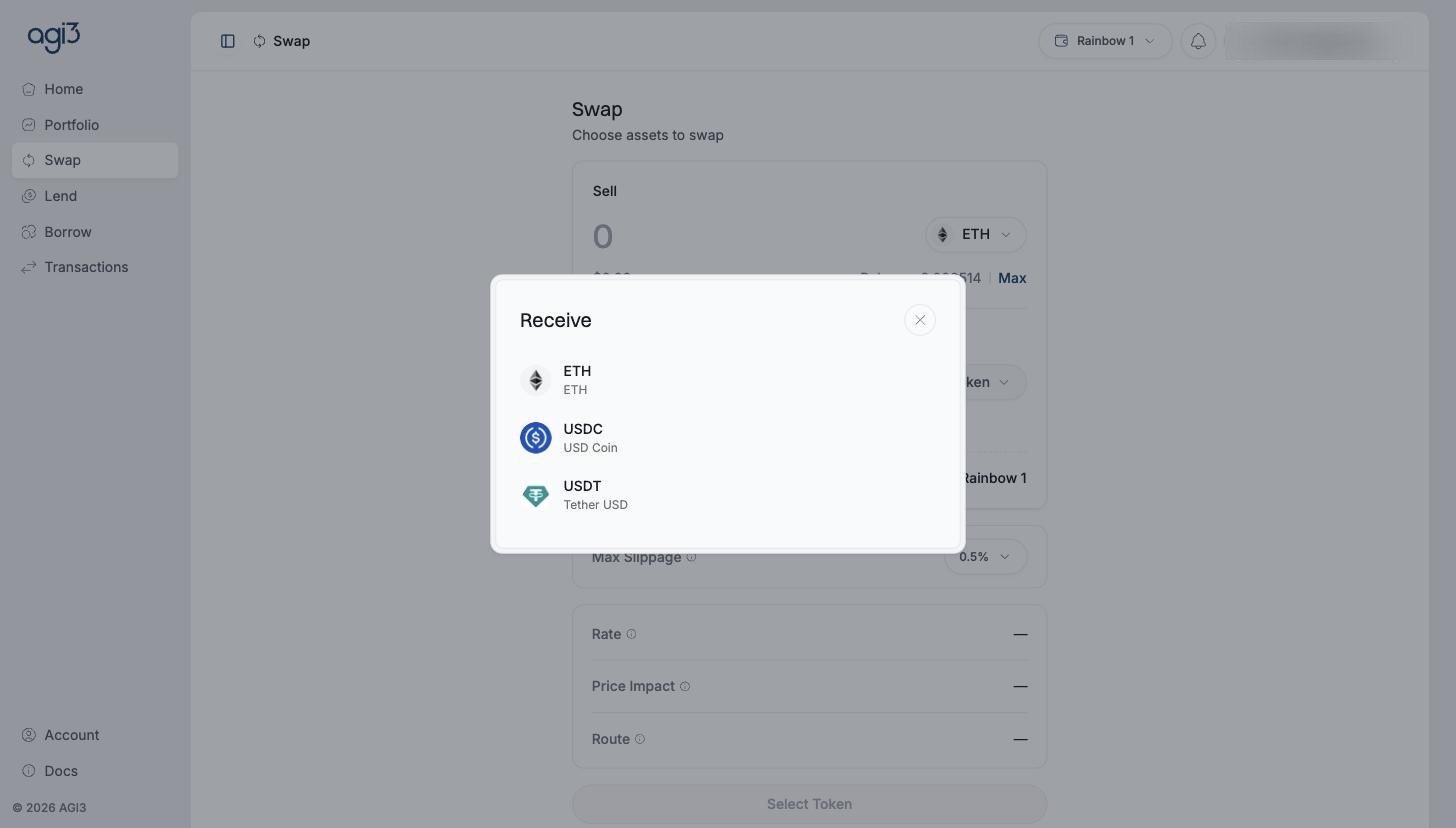
2. Choose the asset to sell and the asset to receive. The token selector shows what is available to swap.
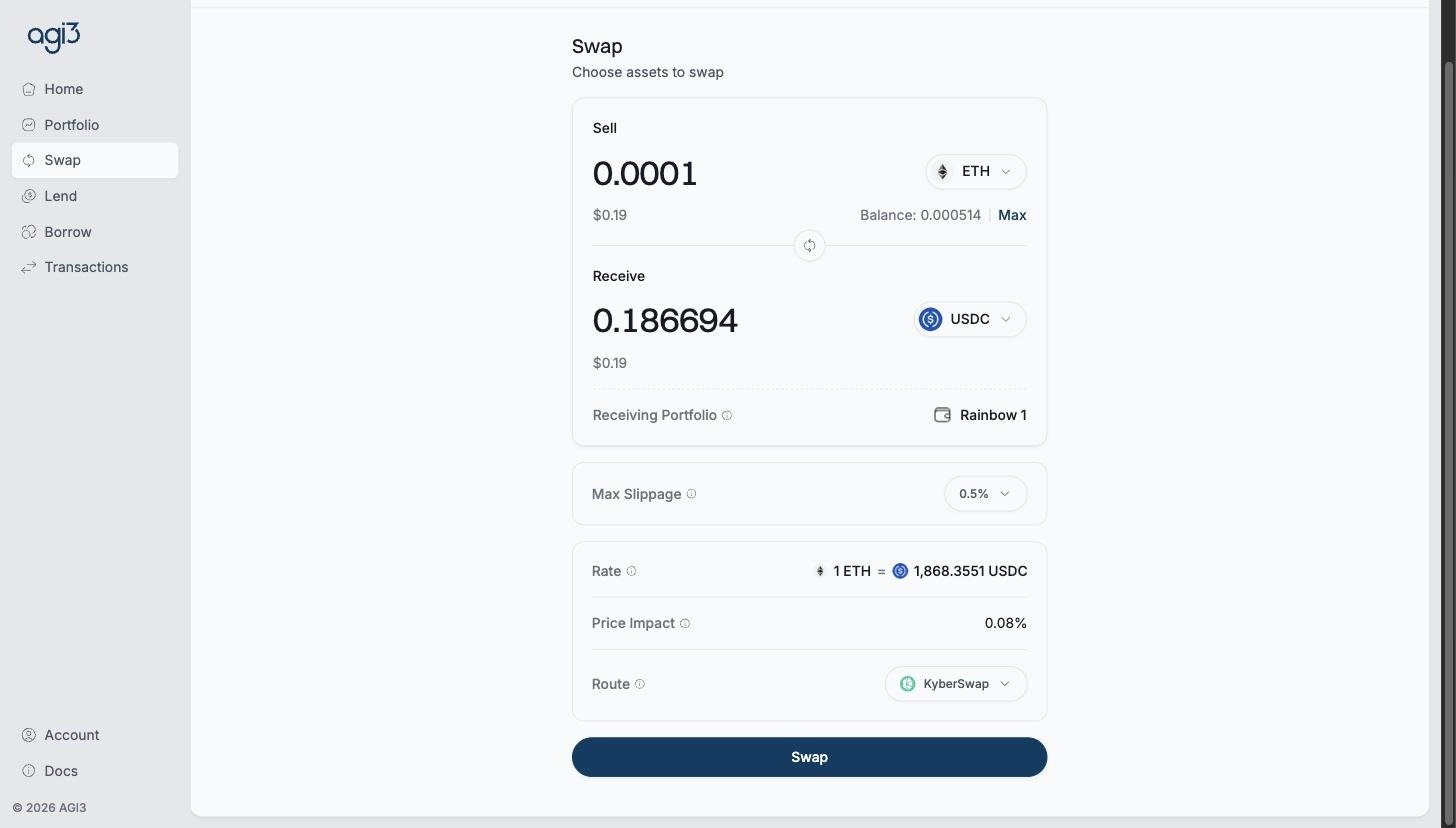
 3. Enter the amount to sell. The quote fills in live: the receive amount, the rate, the price impact, and the route the swap will take.
 4. Review, confirm, and sign in your wallet. The swap executes onchain like any other action on the platform, through the same [authorization model](/how-to/how-transactions-are-signed) as a supply or a borrow.
5. Once confirmed, the received asset is available in that portfolio: ready to supply into a lend market, post as collateral, or repay debt.
## Reading the quote
Three numbers deserve a look before you confirm, in this order:
* **Price impact.** How much your own trade moves the price against you. A large swap in a thin market can cost materially more than the quoted rate suggests; if the impact looks high, consider splitting the swap or reconsidering the size.
* **The route.** The path the swap takes to fill. It is shown so you can see how your trade is being executed, not because you need to act on it.
* **Minimum received under your slippage setting.** The quote is live and the market can move between quoting and execution. **Maximum slippage**, configurable above the form, caps how far the executed price may deviate from the quote: the swap reverts rather than fill worse than your cap.
A tight slippage cap protects the price but can cause reverts in a fast market; a loose one always fills but at a worse achievable price. The default is a reasonable middle; change it deliberately, not habitually.
## Quotes are not promises
A quote reflects the market at the moment it renders. It refreshes while you look at it, and the executed result can differ within your slippage cap. What you are guaranteed is the floor set by your cap, not the number you first saw.
## Where swap fits in common flows
* **Repaying a borrow:** your position's debt asset is fixed. Swap into the debt asset, then repay from the same portfolio. See [Borrow against collateral](/how-to/borrow-against-collateral).
* **Entering a lend market:** swap into the market's asset, then supply. See [Supply assets to earn yield](/how-to/supply-assets).
* **The looping strategy** uses swap as its middle leg on each cycle. See [The looping strategy](/borrowing/looping), including its costs; swap fees and price impact compound across cycles.
4. Review, confirm, and sign in your wallet. The swap executes onchain like any other action on the platform, through the same [authorization model](/how-to/how-transactions-are-signed) as a supply or a borrow.
5. Once confirmed, the received asset is available in that portfolio: ready to supply into a lend market, post as collateral, or repay debt.
## Reading the quote
Three numbers deserve a look before you confirm, in this order:
* **Price impact.** How much your own trade moves the price against you. A large swap in a thin market can cost materially more than the quoted rate suggests; if the impact looks high, consider splitting the swap or reconsidering the size.
* **The route.** The path the swap takes to fill. It is shown so you can see how your trade is being executed, not because you need to act on it.
* **Minimum received under your slippage setting.** The quote is live and the market can move between quoting and execution. **Maximum slippage**, configurable above the form, caps how far the executed price may deviate from the quote: the swap reverts rather than fill worse than your cap.
A tight slippage cap protects the price but can cause reverts in a fast market; a loose one always fills but at a worse achievable price. The default is a reasonable middle; change it deliberately, not habitually.
## Quotes are not promises
A quote reflects the market at the moment it renders. It refreshes while you look at it, and the executed result can differ within your slippage cap. What you are guaranteed is the floor set by your cap, not the number you first saw.
## Where swap fits in common flows
* **Repaying a borrow:** your position's debt asset is fixed. Swap into the debt asset, then repay from the same portfolio. See [Borrow against collateral](/how-to/borrow-against-collateral).
* **Entering a lend market:** swap into the market's asset, then supply. See [Supply assets to earn yield](/how-to/supply-assets).
* **The looping strategy** uses swap as its middle leg on each cycle. See [The looping strategy](/borrowing/looping), including its costs; swap fees and price impact compound across cycles.